Potential Risks and Complications: What You Need to Know
Every surgical procedure carries inherent risks. Understanding these risks and how to minimize them is essential for informed decision-making.
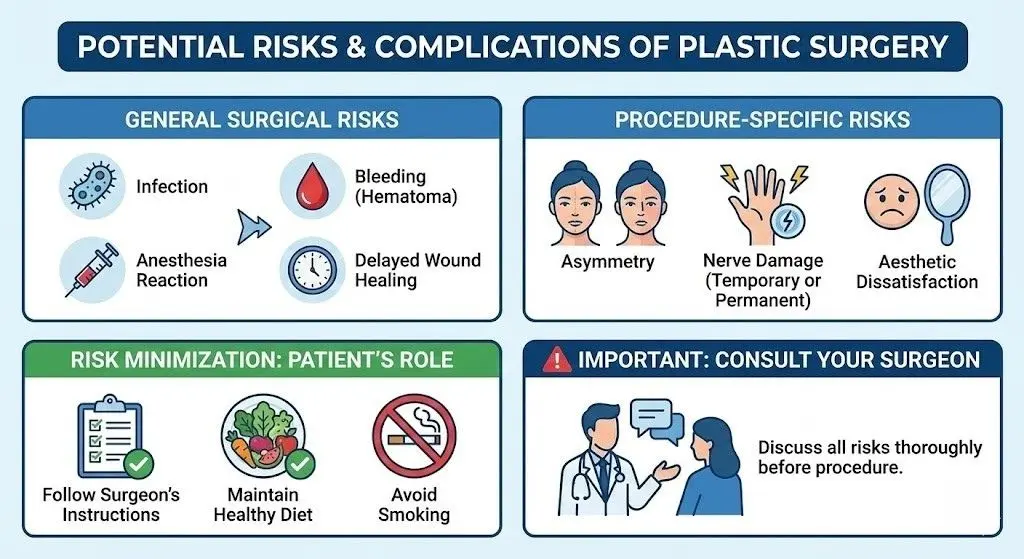
At Wholecares, we believe that a truly informed patient understands not only the potential benefits but also the possible complications of surgery.
The Reality of Surgical Risk
No surgeon can guarantee a risk-free procedure. What separates excellent care:
- Transparency: Open discussion of risks
- Preparation: Thorough pre-operative evaluation
- Expertise: Skilled, experienced surgeon
- Patient Compliance: Following instructions
Universal Surgical Risks
- Infection: 1-5% incidence, preventable with antibiotics and proper wound care.
- Bleeding/Hematoma: Avoided by controlling blood pressure and avoiding blood thinners.
- Anesthesia Reactions: Rare but serious complications (<1 in 10,000 cases).
- Delayed Healing: Worsened by smoking, diabetes, poor nutrition.
- Scarring: All surgery creates scars; quality depends on technique and care.
Procedure-Specific Risks
Rhinoplasty
- Breathing difficulties
- Asymmetry or dissatisfaction
- Need for revision surgery (10-15%)
Breast Surgery
- Capsular contracture
- Implant rupture or leakage
- Loss of nipple sensation
Liposuction
- Contour irregularities
- Fluid accumulation (seroma)
- Fat embolism (rare but serious)
Facelift
- Nerve damage (usually temporary)
- Hair loss at incision sites
- Skin necrosis in smokers
Abdominoplasty
- Seroma (fluid accumulation)
- DVT or pulmonary embolism (rare)
- Skin necrosis in smokers
Psychological Risks
- Unrealistic Expectations: Disappointment if results don't match imagined ideals.
- Post-Operative Depression: Temporary emotional lows during recovery.
- Body Dysmorphia: Pre-existing BDD can worsen.
How Wholecares Minimizes Risk
- Rigorous Screening: Thorough medical evaluations before surgery.
- Experienced Teams: Surgeons with thousands of procedures completed.
- State-of-the-Art Facilities: Accredited surgical centers with advanced monitoring.
- 24/7 Support: Direct access to our medical team via WhatsApp.
- Transparent Communication: Honest discussion of all risks.
Frequently Asked Questions
Will I have visible scars?
All surgery leaves scars, but plastic surgeons are trained to hide incisions in natural skin creases or hidden areas. With proper care, scars fade significantly over 12-18 months.
What is the risk of anesthesia?
Serious complications from anesthesia are extremely rare (less than 1 in 10,000) in healthy individuals. Our anesthesiologists monitor you continuously throughout the procedure.
How can I minimize complications?
The best way to minimize risks is to stop smoking at least 4 weeks before surgery, maintain a healthy diet, and follow your surgeon's pre- and post-operative instructions strictly.
Recommended Reading
This information is for informational purposes only and does not constitute medical advice. Please consult your physician.