Primary Causes of Obesity: Why It's Not Just About Willpower
For decades, society has treated obesity as a simple math problem. But modern science tells a different story: it is a complex, chronic disease.
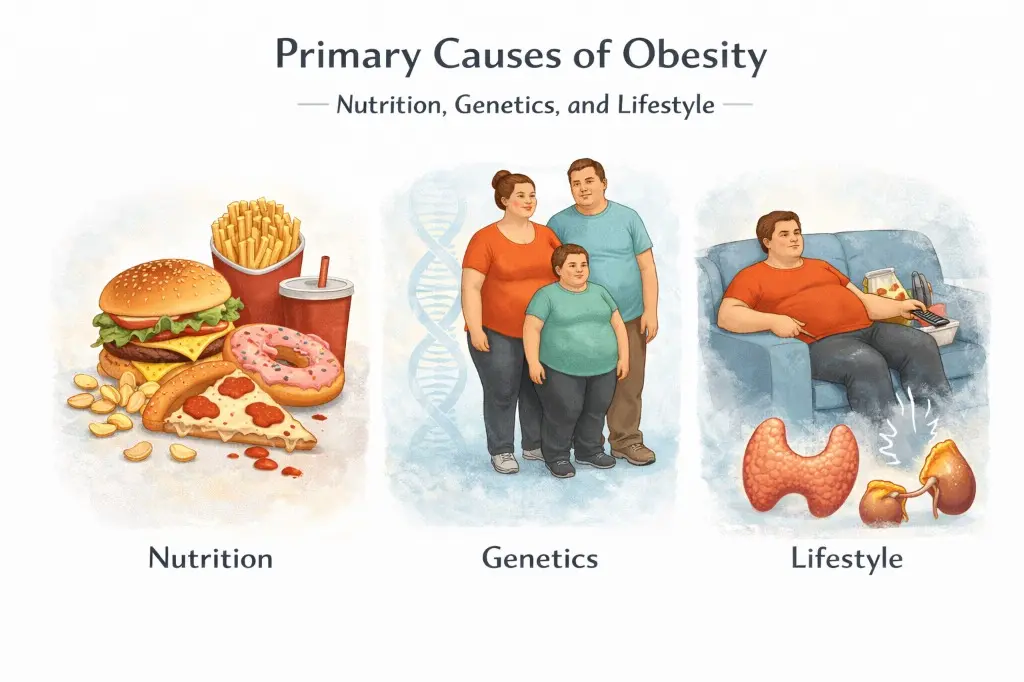
For decades, society has treated obesity as a simple math problem: "calories in versus calories out." This oversimplification has left millions feeling like failures, believing they simply lack the willpower to change. But modern science tells a different story. Obesity is a complex, chronic disease driven by a powerful interplay of biological, environmental, and genetic factors that are often beyond self-blame to seeking medical solutions.
1. Nutritional Imbalance in a Modern World
The leading cause of obesity is nutritional imbalance, specifically the widespread consumption of high-calorie, processed, and fatty foods. We live in an "obesogenic" environment where calorie-dense, nutrient-poor foods are cheaper and more accessible than healthy options.
These foods are often engineered to be hyper-palatable, bypassing the body's natural fullness signals. When this is combined with a sedentary lifestyle, the energy surplus is stored as visceral fat, which triggers further metabolic dysfunction.
2. The Genetic Blueprint
Can you inherit obesity? The answer is a resounding yes. Genetic factors play a crucial role in determining your susceptibility to weight gain. Research indicates that children of obese parents face an 80% higher risk of developing the condition themselves.
Genetics influence:
- Metabolic Rate: How efficiently your body burns calories at rest.
- Appetite Regulation: How intensely you feel hunger and satiety.
- Fat Storage: Where your body prefers to store excess energy.
According to the World Health Organization (WHO), overlooking the genetic component undermines valid medical treatments.
3. Hormones and Medical Conditions
Sometimes, weight gain is a symptom of an underlying medical issue rather than a lifestyle choice. Hormonal disorders involving the thyroid gland (hypothyroidism) or adrenal glands (Cushing's syndrome) can drastically slow down metabolism and trigger rapid weight gain.
Furthermore, resistance to hormones like Insulin and Leptin can trap the body in "storage mode," making traditional dieting nearly impossible without medical intervention.
Breaking the Cycle
Recognizing that obesity is a multi-faceted disease is liberating. It means that fighting biology with willpower alone is an unfair battle. Medical guidelines now support treating obesity with the same seriousness as diabetes or hypertension.
If you have struggled with weight for years despite your best efforts, it may be time to consider metabolic solutions that address these biological root causes.
Curious about your options? Learn more about advanced obesity treatments or contact our medical team for a personalized evaluation.
📌 The Big Picture: Obesity Drivers
Is obesity purely genetic?
No, while genetics play a significant role (confirming up to 80% of risk), environmental factors, nutrition, and lifestyle are also critical contributors.
Can stress cause obesity?
Yes, chronic stress raises cortisol levels, which can lead to increased appetite and fat storage, particularly in the abdominal area.
Why is processed food linked to obesity?
Processed foods are often calorie-dense and low in nutrients, designed to bypass the body's natural fullness signals (leptin), leading to involuntary overeating.
Recommended Reading
This information is for informational purposes only and does not constitute medical advice. Please consult your physician.