Defining Obesity and Diagnosis Criteria: A Medical Perspective
Obesity is not a lifestyle choice; it is a complex medical condition that requires a scientific approach to treatment.
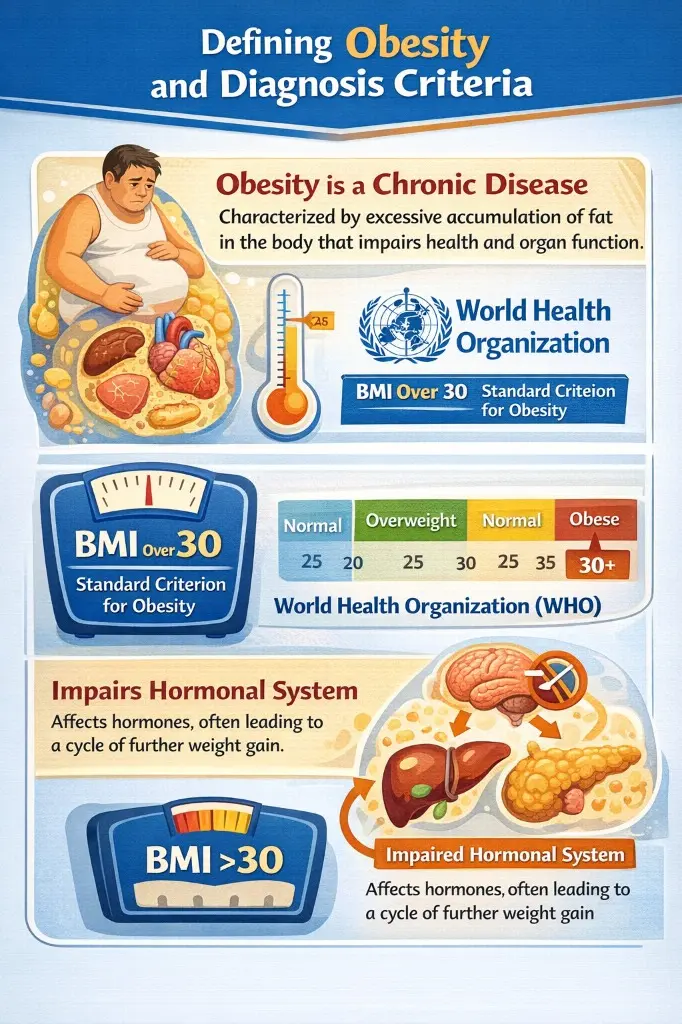
Obesity is often misunderstood as a simple result of "eating too much and moving too little." However, modern medicine defines obesity as a chronic, progressive, and relapsing disease characterized by the excessive accumulation of body fat that impairs health and organ function. According to the World Health Organization (WHO), it is one of the leading preventable causes of death worldwide.
Medical Reality
- 📏 BMI Standard: The primary tool for diagnosis.
- ✅ Disease, Not Choice: A complex chronic condition.
- ⚠️ Serious Risks: Gateway to over 40 comorbidities.
The Obesity Epidemic
According to the World Health Organization (WHO), obesity is one of the leading preventable causes of death worldwide. It is not merely a cosmetic concern but a complex medical condition that affects the hormonal system, metabolism, and overall longevity.
Diagnosis Criteria: Understanding Body Mass Index (BMI)
The most widely used metric for diagnosing obesity is the Body Mass Index (BMI). This calculation, derived by dividing a person's weight in kilograms by the square of their height in meters (kg/m²), provides a reliable screening tool for weight categories.
WHO Obesity Classifications
| Classification | BMI Range (kg/m²) | Risk of Comorbidities |
|---|---|---|
| Underweight | < 18.5 | Low |
| Normal Range | 18.5 - 24.9 | Average |
| Overweight | 25.0 - 29.9 | Increased |
| Obesity Class 1 | 30.0 - 34.9 | Moderate |
| Obesity Class 2 (Severe) | 35.0 - 39.9 | Severe |
| Obesity Class 3 (Morbid) | 40.0 and Above | Very Severe |
While BMI is the standard diagnostic tool, true medical assessment also considers waist circumference (indicating visceral fat) and the presence of metabolic syndromes.
Why "Just Eat Less" Doesn't Work: The Hormonal Factor
One of the most critical aspects of defining obesity is understanding that it is a hormonal disease, not just a caloric one. The body has a "set point" for weight, regulated by complex signals between the brain and digestive system.
- Leptin Resistance: Leptin is the hormone that tells your brain "I am full." In obesity, high levels of body fat lead to high leptin levels, but the brain stops "listening" to the signal. This results in constant hunger despite having adequate energy stores.
- Insulin Resistance: High consumption of processed foods spikes insulin, the fat-storage hormone. chronically high insulin levels lock energy into fat cells, making it difficult for the body to access that energy for burning.
The Serious Health Risks of Untreated Obesity
Diagnosing and treating obesity is vital because it acts as a gateway to over 40 other medical conditions. Effective management of obesity often results in the remission of:
- Metabolic Disorders: Type 2 Diabetes, Insulin Resistance, Dyslipidemia (High Cholesterol).
- Cardiovascular Diseases: Hypertension (High Blood Pressure), Coronary Heart Disease, Stroke.
- Respiratory Issues: Obstructive Sleep Apnea, Asthma.
- Mechanical Problems: Osteoarthritis (Joint Pain), Chronic Back Pain, Mobility Limitations.
Conclusion: It's Time for a Medical Approach
Recognizing obesity as a disease is the first step toward effective treatment. It shifts the focus from "willpower" to "medical management." Whether through advanced nutritional therapy, medication, or bariatric surgery, there are proven, scientific paths to reclaiming your health.
If your BMI is over 30 and you are struggling to lose weight, consult with a specialist to discuss a personalized treatment plan. You do not have to fight your biology alone.
Frequently Asked Questions
What is the difference between overweight and obese?
Overweight is a BMI of 25-29.9, while Obesity begins at a BMI of 30. Obesity is considered a chronic disease with significantly higher health risks.
Is BMI accurate for everyone?
BMI is a good general screening tool but may not be accurate for athletes with high muscle mass. A comprehensive medical assessment also considers waist circumference and body composition.
Can I diagnose myself with obesity?
You can calculate your BMI at home, but a formal diagnosis involves assessing metabolic health and comorbidities by a medical professional.
Recommended Reading
What is Bariatric Surgery? A Medical SolutionThis information is for informational purposes only and does not constitute medical advice. Please consult your physician.