Obesity Treatment Options: From Diet to Medication & Surgery
The goal of treatment is to bring the patient's BMI within the 20 to 25 range. The first line of defense is personalized care.
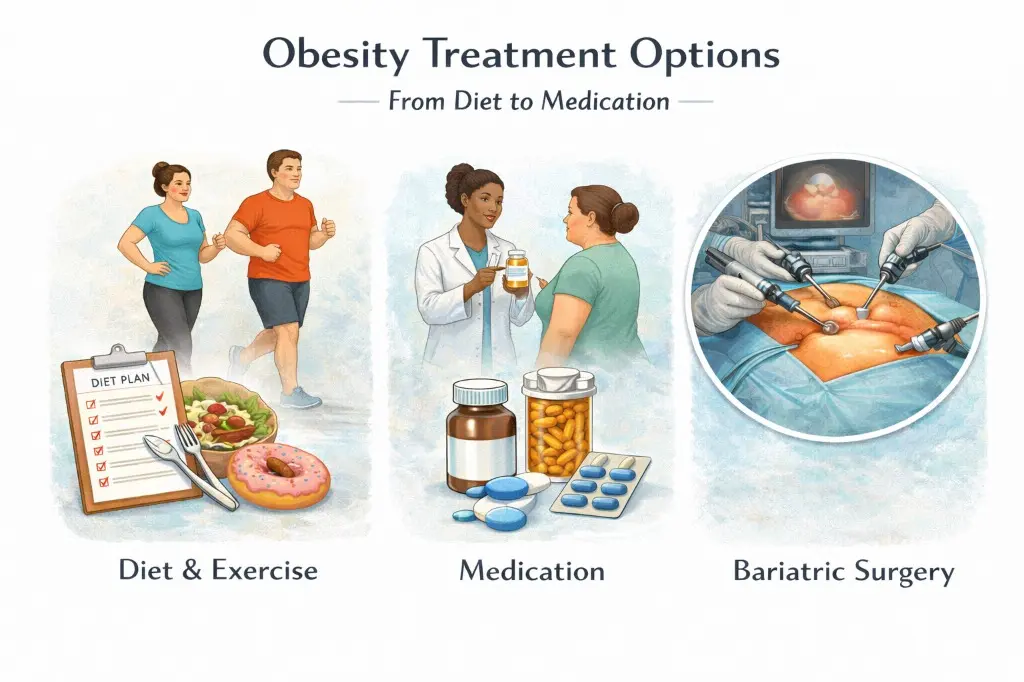
Treating obesity is not a one-size-fits-all journey. Just as the causes of obesity are complex--involving genetics, hormones, and lifestyle--the solutions must be equally tailored. The goal of any medical weight loss treatment is not just to drop numbers on a scale, but to bring the patient's Body Mass Index (BMI) within the healthy 20 to 25 range, effectively reversing metabolic diseases.
1. The First Line of Defense: Diet and Exercise
Every weight loss journey begins with the fundamentals. A personalized diet and exercise program is the foundation of metabolic health. Current medical guidelines recommend at least 30 minutes of moderate exercise daily--such as brisk walking, swimming, or cycling--to stimulate metabolism.
However, this is not about "starving" yourself. It is about nutritional re-education.
- Supervised by Specialists: Working with a dietitian ensures you are losing fat, not muscle.
- Sustainable Changes: Replacing processed foods with whole, nutrient-dense options.
2. Medical Management: When Diet Isn't Enough
For many patients, biological resistance makes diet alone insufficient. In these cases, physician-controlled medication can bridge the gap. Modern weight loss medications work by:
- Managing Appetite: Regulating hunger hormones like Ghrelin.
- Metabolic Balance: Improving insulin sensitivity and blood sugar control.
These medications are tools, not magic pills, and are most effective when combined with lifestyle changes.
3. Bariatric Surgery: The Definitive Solution
When lifestyle modifications and medications fail to provide long-term results, or when a patient's BMI exceeds 35-40, bariatric surgery is considered the most definitive and effective option.
Surgery acts as a metabolic reset button. Procedures like Sleeve Gastrectomy or Gastric Bypass do more than restrict food intake; they fundamentally alter how your body processes energy and signals fullness. It is currently the only treatment method proven to provide substantial, long-term weight loss for cases of severe obesity.
Finding Your Path
Navigating these options can be overwhelming. The right choice depends on your starting BMI, your medical history (such as Type 2 Diabetes), and your previous attempts at weight loss.
Not sure which option is right for you? Schedule a free consultation with our specialists to review your medical history and discuss the best path forward.
Frequently Asked Questions
Is diet enough to cure obesity?
For many with Class 2 or 3 obesity, hormonal resistance makes diet alone insufficient. Medical management or surgery is often needed to reset the body's set point.
Are weight loss drugs safe?
Yes, modern FDA-approved medications (like GLP-1 agonists) are safe when prescribed and monitored by a specialist, but they often require long-term use to maintain results.
Which treatment is right for me?
It depends on your BMI and medical history. BMI 27-35 often suits balloons or medication, while BMI 35+ typically sees the best long-term results with surgery.
Recommended Reading
This information is for informational purposes only and does not constitute medical advice. Please consult your physician.