Obesity Classification and BMI Measurement: Understanding the Numbers
Obesity is more than just a number on a scale; it determines your path to health.
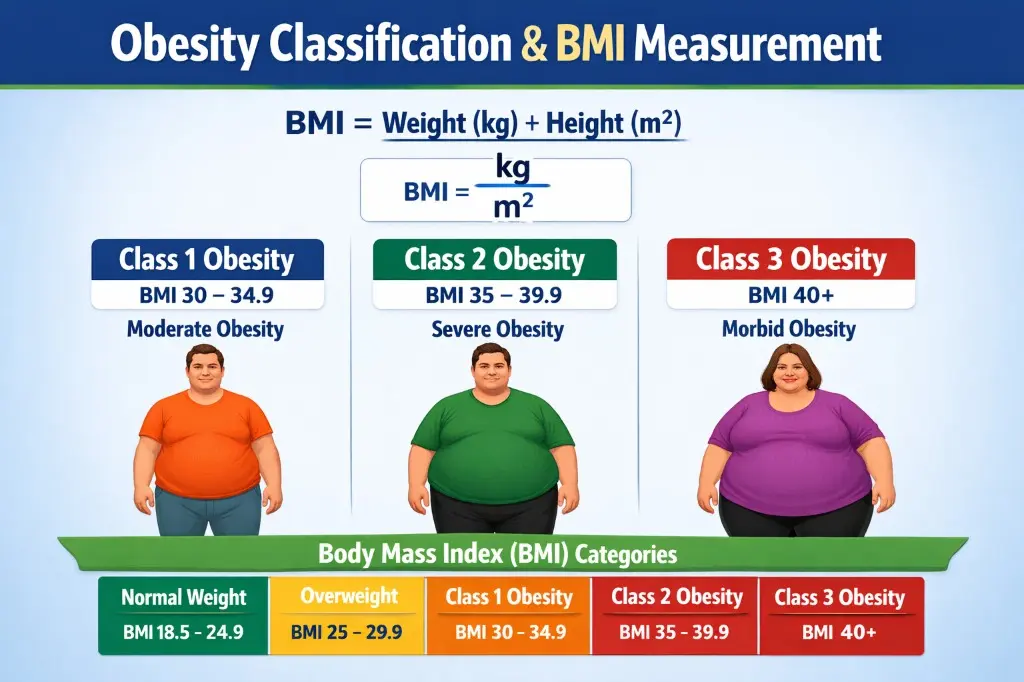
Obesity is a complex medical condition classified by the Body Mass Index (BMI). Understanding these classifications is the first step toward determining the right treatment path, whether it be lifestyle changes, medical management, or bariatric surgery. According to the NHS, BMI is a reliable indicator for most adults.
BMI Categories Quick Reference
- 📉 Underweight: BMI < 18.5
- ✅ Normal Weight: BMI 18.5–24.9
- ⚠️ Overweight: BMI 25–29.9
- 🚨 Obese: BMI 30+
What is BMI and How is it Calculated?
Body Mass Index (BMI) is a simple calculation used by medical professionals worldwide to screen for weight categories that may lead to health problems. It is calculated by dividing a person's weight in kilograms by the square of their height in meters (kg/m²).
Formula: BMI = Weight (kg) / Height (m)²
While BMI doesn't directly measure body fat, it correlates moderately with more direct measures of body fat. More importantly, it strongly correlates with various metabolic and disease outcomes.
The Three Classes of Obesity
Obesity is not a one-size-fits-all diagnosis. It is categorized into three specific classes based on BMI ranges. These classes help doctors assess the severity of the condition and the urgency of treatment.
Class 1: Moderate Obesity (BMI 30 - 34.9)
Individuals in this range are considered to have Class 1 obesity. At this stage, the risk for health conditions such as type 2 diabetes, hypertension, and sleep apnea begins to increase significantly.
- Treatment focus: Lifestyle modification, nutritional counseling, and potentially weight-loss medications.
Class 2: Severe Obesity (BMI 35 - 39.9)
Class 2 indicates a more serious accumulation of body fat. The risk of comorbidities (co-occurring diseases) becomes much higher.
- Treatment focus: Medical weight management. In the presence of serious comorbidities (like uncontrolled diabetes), bariatric surgery may be considered.
Class 3: Morbid Obesity (BMI 40 and above)
Also known as "extreme" or "severe" obesity, Class 3 represents the highest risk category. Individuals in this range are significantly more likely to experience life-altering health issues and reduced life expectancy.
- Treatment focus: This is the primary threshold for bariatric surgery eligibility. At this level, diet and exercise alone rarely result in long-term, sustainable weight loss due to metabolic adaptations.
Why Classification Matters for Surgery
BMI serves as the primary metric for determining surgical suitability. According to international medical guidelines:
- BMI ≥ 40: You are generally eligible for bariatric surgery (like Sleeve Gastrectomy or Gastric Bypass) regardless of other health conditions.
- BMI 35 - 39.9: You are typically eligible if you have at least one obesity-related health problem (e.g., diabetes, high blood pressure, sleep apnea, fatty liver disease).
Understanding your BMI class empowers you to have an informed conversation with your healthcare provider about the most effective treatment options for your long-term health. Remember, obesity is a chronic disease, not a failure of willpower. Treating it medically is the strongest step you can take.
Frequently Asked Questions
What BMI is required for surgery?
Generally, a BMI of 40+ or a BMI of 35+ with obesity-related health conditions (like diabetes or hypertension) makes you eligible for bariatric surgery.
What is "Morbid" Obesity?
It is a medical term for Class 3 Obesity (BMI 40 and above), indicating a significantly high risk of life-shortening health problems.
Can I have surgery with a BMI of 32?
Typically, bariatric surgery is reserved for BMI 35+. However, non-surgical options like the Gastric Balloon may be suitable and effective for lower BMI ranges.
Recommended Reading
Who is Eligible for Obesity Surgery? Criteria & FactsThis information is for informational purposes only and does not constitute medical advice. Please consult your physician.