Why is Hair Transplantation Performed? The Science and Psychology of Restoration
Beyond physical restoration, hair transplantation aims to boost self-confidence and provide a permanent solution for hair loss.
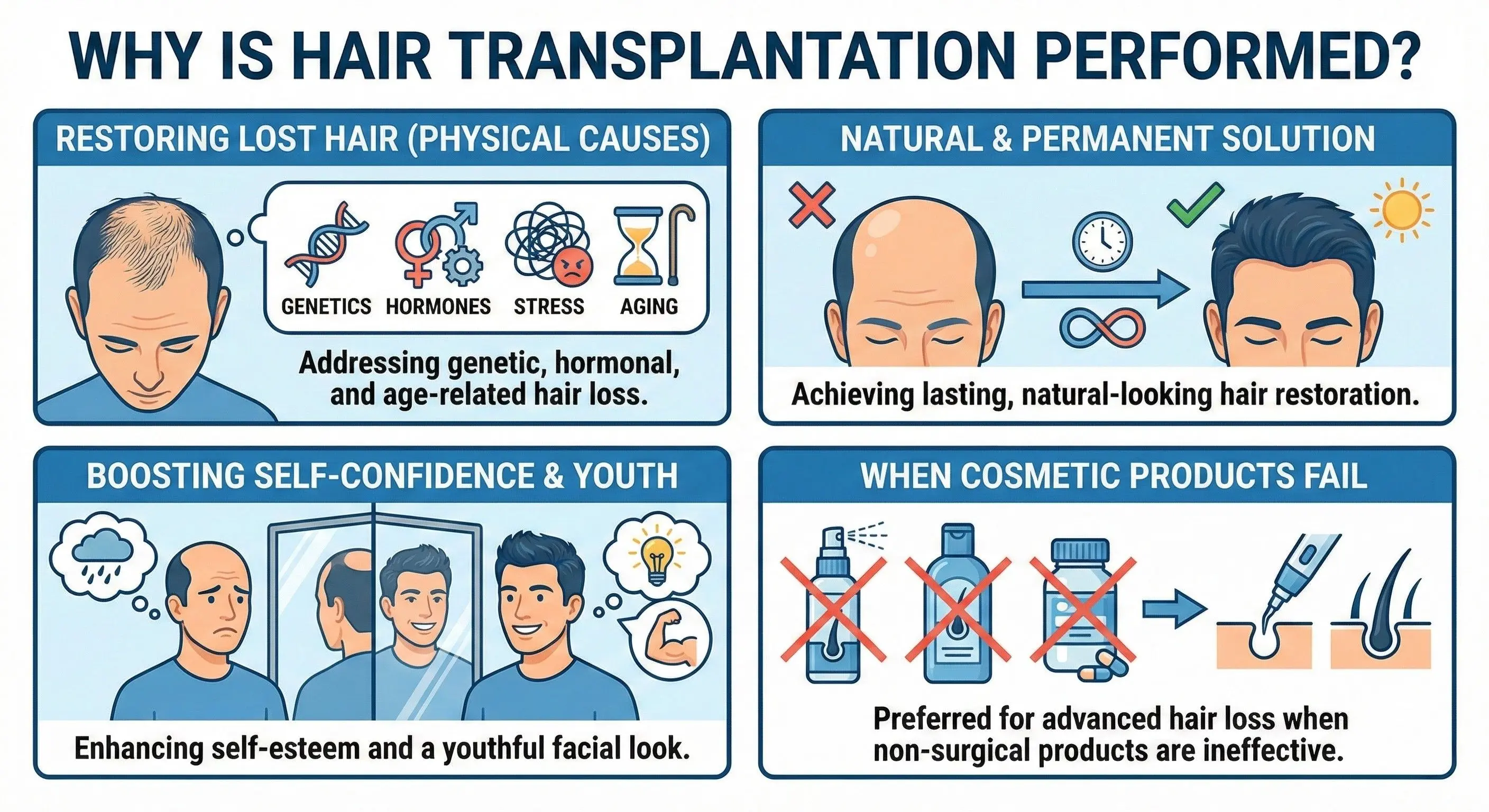
The primary goal of hair transplantation is to restore lost hair in a natural and permanent way for those suffering from genetic predisposition, hormonal changes, stress, or aging. Beyond the physical restoration, it aims to boost self-confidence and provide a more youthful facial expression. It is often preferred when cosmetic products fail to provide a permanent solution for advanced hair loss.
Top Reasons for Restoration
- 🧬 Genetic Solution: The only permanent fix for male-pattern baldness.
- 📈 Self-Confidence: Restore your identity and professional image.
- 🛡️ Definitive Results: Moves past temporary fixes like powders or wigs.
The Core Motivations for Restoration
Hair loss is a progressive process that can significantly impact how we perceive ourselves. People choose hair transplantation for several key reasons that span both the physical and psychological realms.
1. Permanent Solution for Genetic Hair Loss
Androgenetic alopecia (male-pattern baldness) is the most common cause of hair loss. Since it's genetic, topical treatments often only slow down the process. Hair transplantation offers a one-time, permanent fix by using follicles that are resistant to falling out.
2. Reclaiming Self-Confidence
Hair is often tied to identity and youth. Reclaiming a fuller head of hair can lead to a significant boost in professional and personal self-esteem. It's about feeling like "yourself" again when you look in the mirror.
3. Aesthetic Facial Harmony
A receding hairline or thinning crown can alter the proportions of your face. By restoring the hairline, specialists create a more youthful and balanced facial expression that complements your features.
Addressing the Root Causes
Whether it's due to genetic predisposition, hormonal shifts, or the physical toll of stress and aging, hair transplantation treats the symptom with a biological solution. It relocates your own healthy follicles to where they are needed most, ensuring a natural integration.
When Cosmetic Products Fail
Shampoos, serums, and medications have their place in early-stage thinning, but for advanced hair loss, they often fall short of expectations. Hair transplantation is the final, definitive step for those seeking real, visible density without the daily hassle of topical applications.
Conclusion: A New Chapter
Understanding why we perform this procedure is the first step in the journey. It's not just about hair; it's about restoration, confidence, and the freedom to stop worrying about hair loss. At Wholecares, we focus on the holistic journey of our patients, ensuring the psychological transformation is just as successful as the physical one.
Frequently Asked Questions
What is the main cause of hair loss?
The most common cause is androgenetic alopecia (genetic hair loss), often triggered by the hormone DHT. Stress, aging, and hormonal changes can also contribute.
Can women get hair transplants?
Absolutely. Women suffering from thinning hair or pattern baldness are excellent candidates for hair transplantation, often using the DHI method to avoid shaving the entire head.
When is the right time for a hair transplant?
The best time is when your hair loss has stabilized, or you have noticeable thinning that affects your confidence. A consultation is necessary to determine if your donor area is sufficient.
Recommended Reading
This information is for informational purposes only and does not constitute medical advice. Please consult your physician.