Hair Transplant Methods: FUE, FUT, and DHI Explained
Choosing the right technique is a critical decision. Discover the differences
between modern hair restoration methods.
Medical ReviewerWholecares Medical Advisory Board
Fact Checked
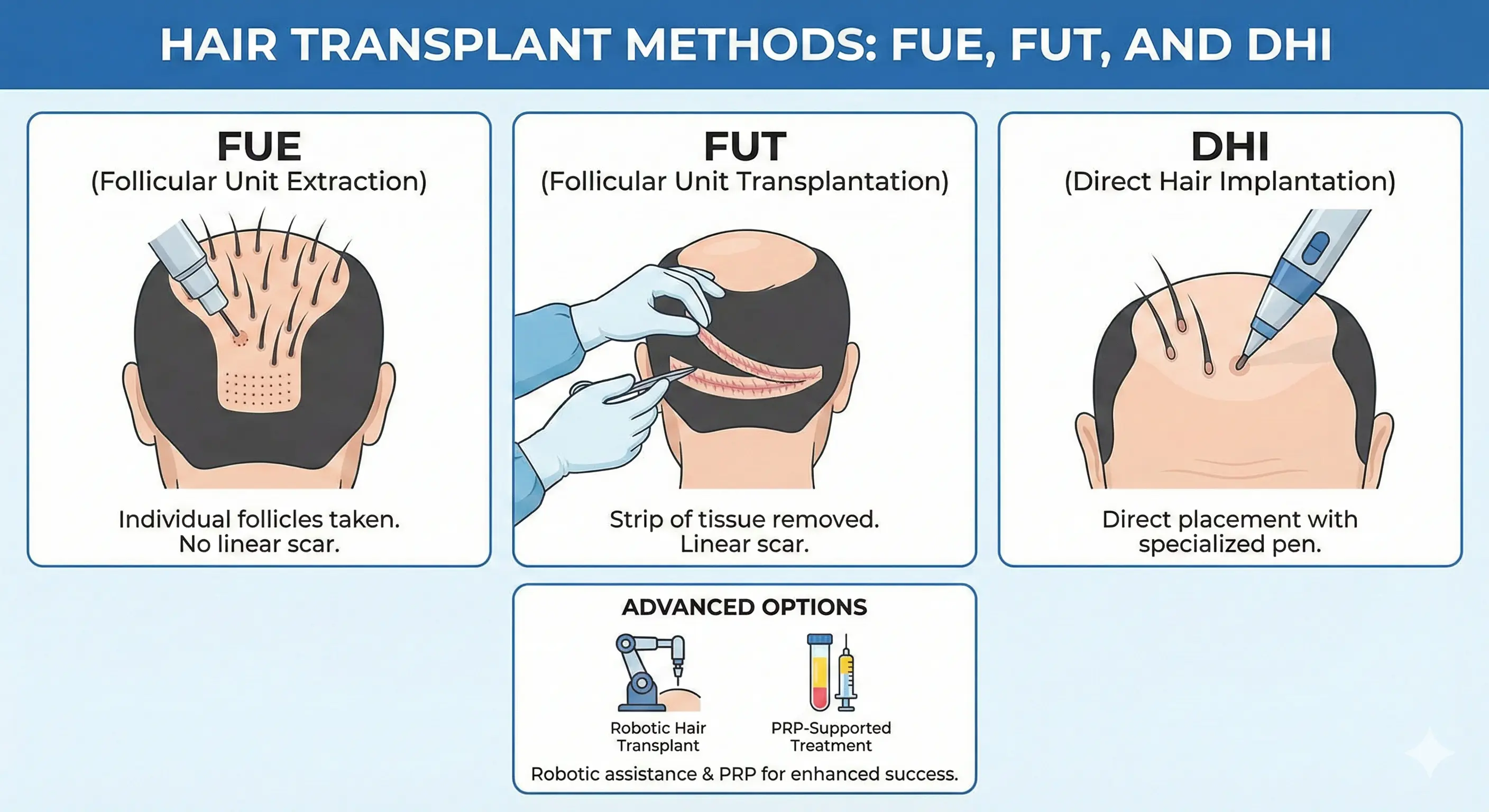
Choosing the right technique is a critical decision in your hair restoration journey. Modern medicine
offers several advanced methods, each tailored to different types of hair loss and patient needs. The
most common techniques are FUE (Follicular
Unit Extraction), where follicles are taken
individually, and FUT (Follicular Unit Transplantation), which involves a strip of
tissue. Additionally, the DHI (Direct Hair Implantation) method allows for direct
placement using specialized pens.
Frequently Asked Questions
What is the difference between FUE and DHI?
FUE involves opening channels before implantation, while DHI uses a Choi Pen to implant follicles
directly without prior channel opening. DHI allows for higher density and often requires no
shaving of the recipient area.
Which method leaves the least scarring?
Both FUE and DHI are minimally invasive and leave no visible linear scars. The tiny micro-dots in
the donor area heal within days and become virtually undetectable.
Is DHI more expensive than FUE?
Yes, DHI is typically more expensive because it is a more labor-intensive and precise technique
requiring specialized equipment (Choi Pens).