What is Plastic, Reconstructive, and Aesthetic Surgery?
Plastic, reconstructive, and aesthetic surgery is a comprehensive medical field focused on restoring body form and improving aesthetic appearance. This specialty adopts a holistic approach, addressing both functional corrections and visual enhancements.
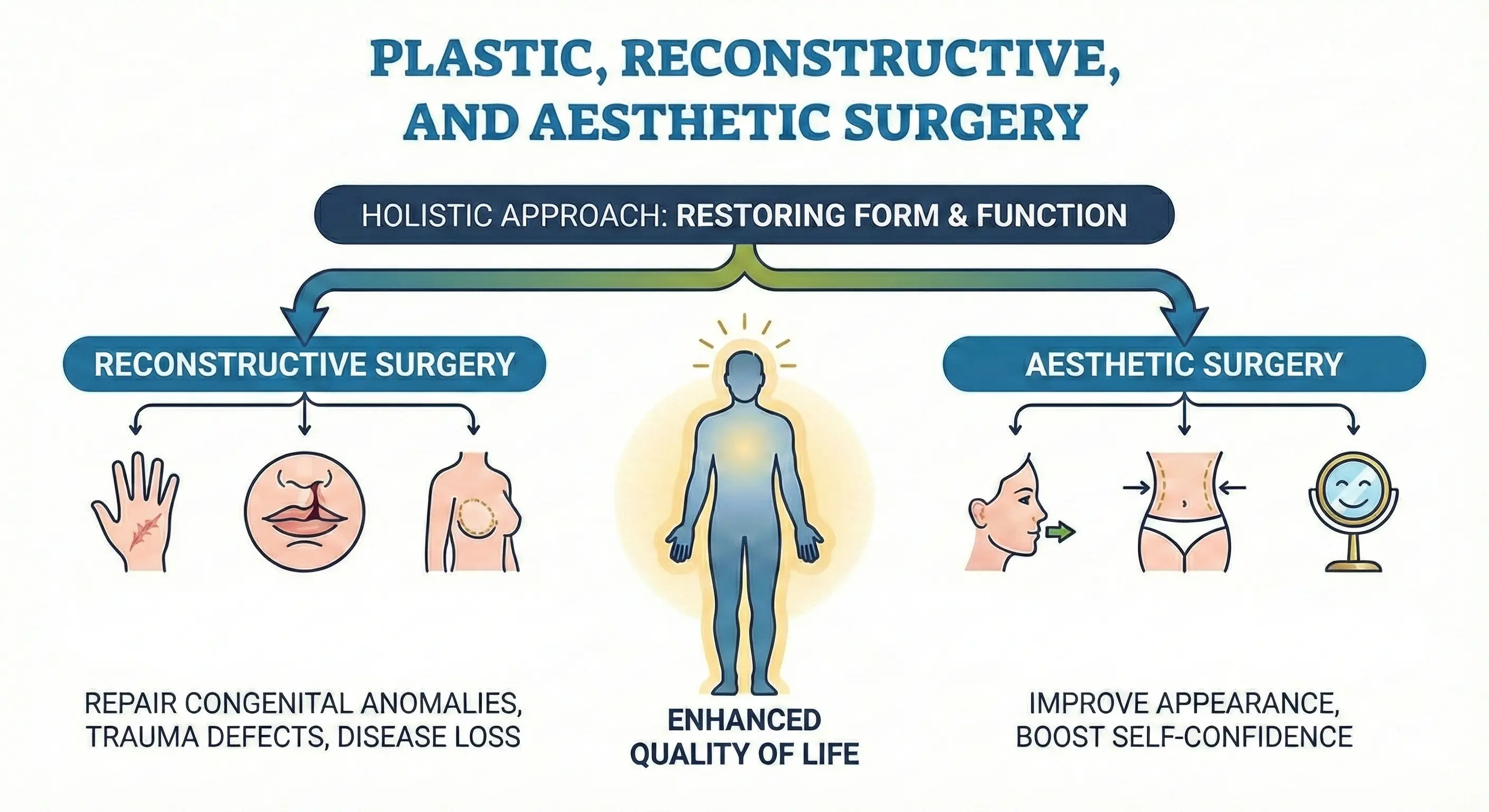
While reconstructive surgery aims to repair congenital anomalies, trauma-related defects, or losses due to diseases like cancer, aesthetic surgery focuses on improving the individual's appearance and boosting self-confidence.
Common Procedures
The department covers a wide range of surgical interventions tailored to the patient's health and aesthetic goals:
- Aesthetic Procedures: Includes popular surgeries such as Rhinoplasty (nose job), Breast Aesthetics (augmentation, reduction, and lift), Liposuction (fat removal), Abdominoplasty (tummy tuck), and Blepharoplasty (eyelid surgery).
- Reconstructive Procedures: Focuses on cleft lip and palate repair, breast reconstruction following mastectomy, burn treatment, skin cancer surgery, and complex hand surgeries.
Non-Surgical Aesthetic Treatments
For those seeking rejuvenation without surgery, several minimally invasive options are available:
- Dermal Fillers: Using substances like hyaluronic acid to define facial contours and restore volume in areas like the lips and jawline.
- Mesotherapy: Injections of vitamins, minerals, and hyaluronic acid to nourish and renew the skin.
- Laser Skin Resurfacing: Utilizing fractional CO2 lasers to treat wrinkles, spots, and sagging by stimulating collagen production.
Who Are the Ideal Candidates?
Candidates for plastic surgery generally fall into two categories:
- Reconstructive Patients: Individuals of all ages seeking to restore function and appearance lost due to congenital anomalies, accidents, burns, or cancer treatments.
- Aesthetic Patients: Generally healthy adults with realistic expectations who are dissatisfied with specific physical features such as the shape of their nose or signs of facial aging. Ideal candidates are typically non-smokers with a stable weight.
Contraindications: Who Should Avoid Surgery?
Surgery may not be safe for individuals with certain health conditions, including:
- Uncontrolled chronic diseases such as severe heart, lung, or kidney failure.
- Active infections or weakened immune systems.
- Active smoking, which significantly increases the risk of wound healing issues and tissue loss.
- Psychological conditions like Body Dysmorphic Disorder (BDD) or unrealistic expectations.
- Pregnancy, breastfeeding, or severe obesity.
The Surgical Process: From Consultation to Recovery
The journey begins with a detailed first examination and assessment where aesthetic concerns are discussed.
- Preparation: Includes necessary medical tests, hygiene preparation, and anesthesia evaluation to ensure safety.
- The Operation: Performed under anesthesia using specific procedures determined by the surgeon.
- Follow-up: Regular check-ups are essential to monitor wound healing and prevent complications.
Recovery and Post-Operative Care
The recovery period varies depending on the surgery type and the patient's overall health.
- Early Phase: Swelling, bruising, and pain are common in the first few days and are managed with medication.
- Mid-Term: Between 1-6 weeks, patients can gradually return to daily activities, though heavy exercise should be avoided. Special compression garments may be required for procedures like liposuction or tummy tucks.
- Long-Term: It may take 6 months to a year for scars to mature and final results to become fully visible.
Potential Risks and Complications
Like any surgical intervention, plastic surgery carries certain risks, such as infection, bleeding (hematoma), adverse reactions to anesthesia, and delayed wound healing. Procedure-specific risks include asymmetry, nerve damage (temporary or permanent), or dissatisfaction with the aesthetic outcome. To minimize these risks, patients must strictly follow their surgeon's pre- and post-operative instructions, maintain a healthy diet, and avoid smoking.
Frequently Asked Questions
What is the difference between reconstructive and aesthetic surgery?
Reconstructive surgery focuses on repairing defects caused by birth, trauma, or disease to restore normal function and appearance. Aesthetic (cosmetic) surgery aims to enhance the appearance of a normal body part to boost self-confidence.
Are plastic surgery results permanent?
Many results, like rhinoplasty or tummy tucks, are long-lasting or permanent. However, the natural aging process continues, so maintenance through a healthy lifestyle and non-surgical treatments is often recommended.
Is plastic surgery safe?
Yes, when performed by a qualified surgeon in an accredited facility, risks are minimal. Thorough pre-operative screenings are essential to ensure patient safety.
Recommended Reading
This information is for informational purposes only and does not constitute medical advice. Please consult your physician.