Post-operative Nutrition and Recovery: Your Roadmap to Success
Bariatric surgery changes the anatomy of your stomach, and your relationship with food must change with it. The period immediately following surgery is critical for healing and long-term success. It is not just about "dieting"; it is about re-learning how to eat.
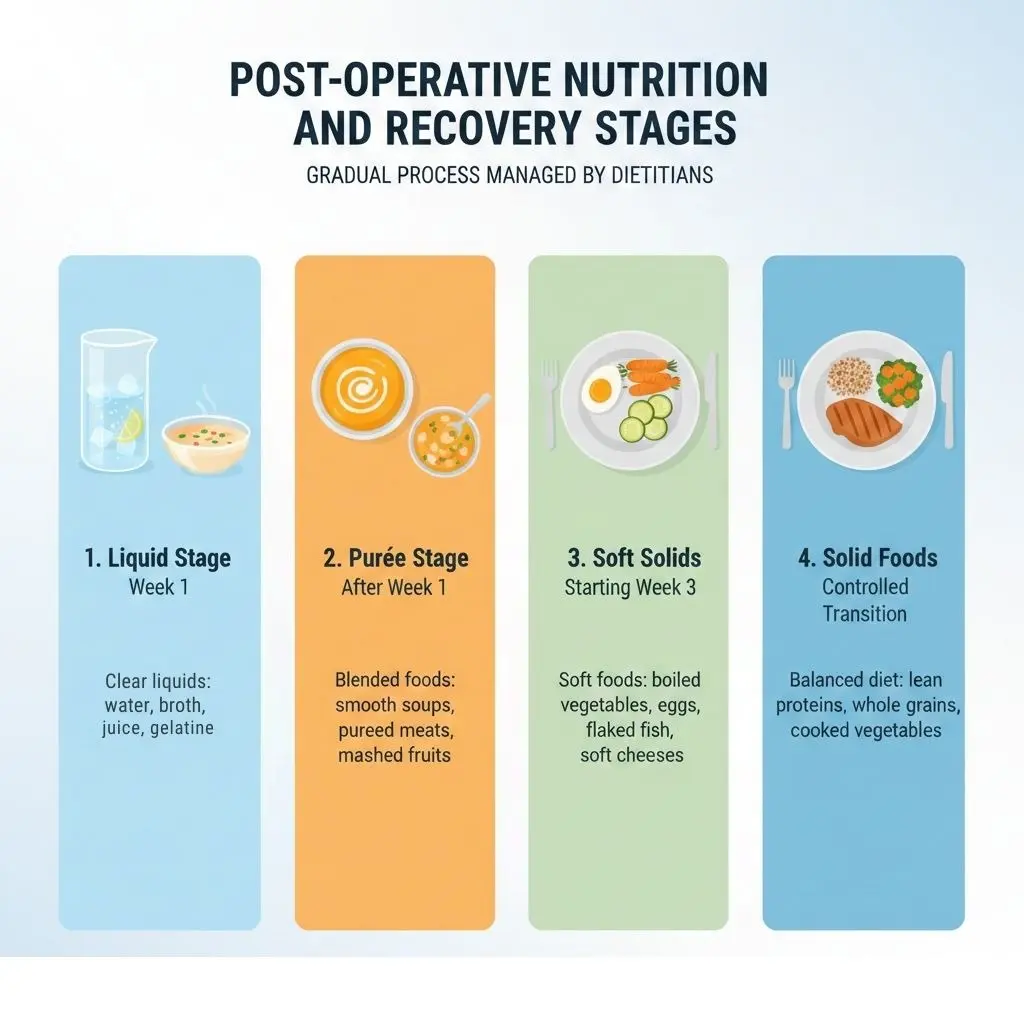
At Wholecares, our dedicated dietitians guide you through a structured, four-stage nutrition plan designed to protect your new stomach while ensuring you get the nutrients you need.
Why Is This Phased Approach Necessary?
After surgery, your stomach is swollen and tender. Eating solid food too soon can cause pain, vomiting, or even damage to the staple lines. This gradual progression allows your digestive system to heal and adapt to its new, smaller capacity.
The 4 Stages of Post-Op Nutrition
Stage 1: The Liquid Phase (Days 1-7)
Goal: Hydration and healing.
Immediately after surgery, your stomach can only handle fluids.
- What to Consume: Water, clear broth, herbal tea, sugar-free gelatin, and diluted fruit juices.
- Key Rule: Sip slowly. Don't gulp. Aim for 1.5 liters of fluid daily to prevent dehydration.
Stage 2: The Puree Phase (Weeks 2-3)
Goal: Introducing consistency without strain.
Once your surgeon clears you, you can start eating foods with a smooth, baby-food consistency.
- What to Eat: Blended soups, low-fat yogurt, mashed cottage cheese, and protein shakes.
- Preparation: Everything must be blended until smooth--no chunks allowed.
- Focus: Protein is your priority to help heal tissues.
Stage 3: Soft Solids (Weeks 3-5)
Goal: Re-learning chewing and texture.
Your stomach is healing well, and you can handle soft, fork-tender foods.
- What to Eat: Scrambled eggs, soft-boiled vegetables, baked fish, soft fruits (without skin), and canned tuna.
- The "Chew" Rule: Chew every bite 20-30 times until it is applesauce capability. Eating too fast will cause discomfort.
Stage 4: Stabilization (Week 5 and Beyond)
Goal: Your new normal.
You can now transition to a regular, healthy diet, but with new rules.
- What to Eat: Lean meats (chicken, turkey), fresh vegetables, whole grains, and pain.
- Supplements are Non-Negotiable: You will likely need lifelong B12, Iron, and Calcium supplements.
Conclusion: Use Food as Fuel
This nutritional journey might seem strict, but it is temporary. As you navigate these stages, you will discover a new appreciation for food--not as an emotional crutch, but as high-quality fuel for your new, active life.
Frequently Asked Questions
When can I eat real food?
You will typically transition to soft solids around week 3-4 and return to regular-textured foods (Stage 4) about 5-6 weeks after surgery.
Why can't I drink with meals?
Drinking pushes food through your small stomach too quickly, leaving you hungry sooner and potentially causing "dumping syndrome" (nausea, dizziness).
Will I need vitamins forever?
Yes. Because you eat less and may absorb less, lifelong multivitamins, calcium, and B12 supplements are non-negotiable to prevent deficiencies.
Recommended Reading
This information is for informational purposes only and does not constitute medical advice. Please consult your physician.