Modern Technology and Long-Term Success Rates
The era of invasive surgery is behind us. Today, advanced robotics and high-precision imaging have revolutionized obesity treatment, making procedures safer, recovery faster, and long-term results more sustainable than ever before.
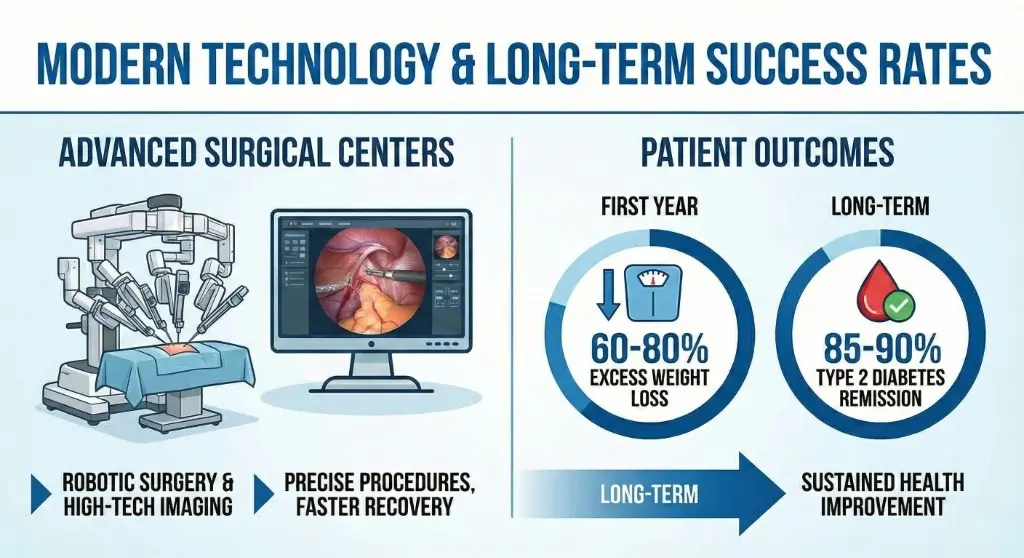
Obesity surgery has evolved significantly over the last two decades. What was once considered a high-risk major operation has become a refined, minimally invasive procedure with safety profiles comparable to gallbladder surgery. This leap is largely due to the integration of cutting-edge medical technology into the operating room.
Technological Edge
- 🤖 Robotic Precision: Enhanced control.
- 📹 High-Def Visualization: Clearer view.
- 🛡️ Enhanced Safety: Real-time monitoring.
Success by the Numbers
The combination of skilled surgical teams and advanced technology translates directly into superior patient outcomes. The statistics speak for themselves:
Weight Loss Outcomes
Patients typically experience rapid and substantial weight loss following surgery. On average, patients lose:
- 60% to 80% of their excess body weight within the first 12 to 18 months.
- Examples: A patient carrying 50kg of excess weight can expect to lose between 30kg and 40kg, reaching a healthier BMI range significantly faster than with diet and exercise alone.
Disease Remission
Beyond the scale, the metabolic impact is profound. Long-term studies confirm high remission rates for obesity-related comorbidities:
- Type 2 Diabetes: 85% to 90% of patients see their diabetes go into complete remission or experience significant improvement.
- Hypertension: Over 70% of patients resolve high blood pressure.
- Sleep Apnea: Up to 95% resolution rate, often within months of surgery.
Long-Term Sustainability
One of the persistent myths about bariatric surgery is that "regain is inevitable." While some weight fluctuation is normal, long-term data shows that surgery is the most effective intervention for sustained weight loss. Unlike yo-yo dieting, which often lowers metabolism, surgery resets the body's metabolic thermostat.
With ongoing nutritional support and the physiological changes induced by the procedure, the vast majority of patients maintain more than 50% of their excess weight loss even 10 to 15 years post-operation.
Frequently Asked Questions
Is robotic surgery better?
Robotic systems provide surgeons with enhanced 3D vision and precision, which can lead to even lower complication rates and faster recovery, especially in complex cases.
What is the success rate 10 years later?
Studies show that most patients maintain over 50% of their excess weight loss more than a decade after surgery, far surpassing the results of diet and exercise alone.
Will I have loose skin?
Significant weight loss often leaves excess skin. While exercise helps muscle tone, many patients choose body contouring surgery after their weight has stabilized.
Recommended Reading
This information is for informational purposes only and does not constitute medical advice. Please consult your physician.