Bariatric Surgery Methods: Sleeve, Bypass, or Balloon?
There is no single "best" operation. The right surgical method depends on your BMI, eating habits, and medical history.
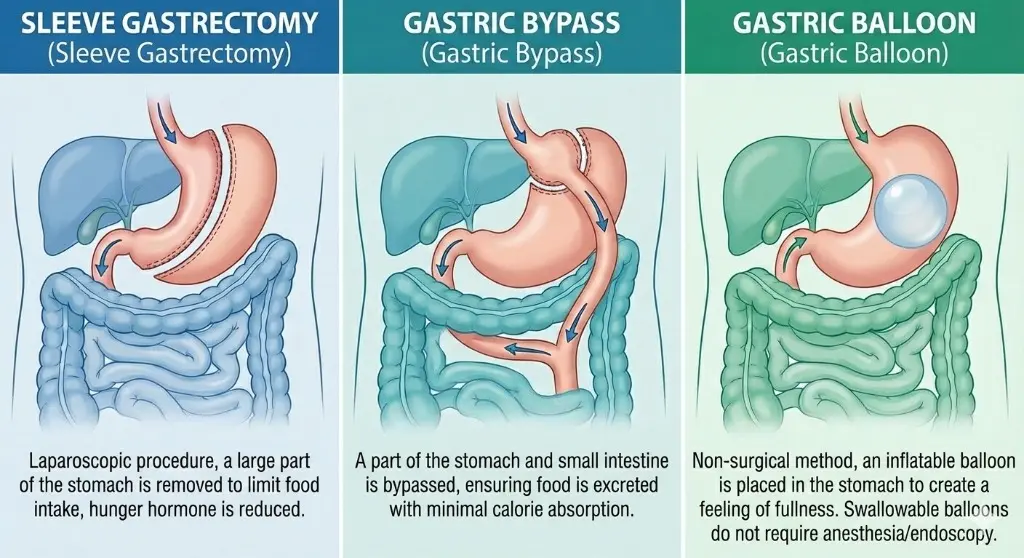
When it comes to treating obesity permanently, there is no single "best" operation. The right surgical method depends on your BMI, eating habits, and medical history. Modern bariatric procedures are safe, minimally invasive, and designed to treat obesity as a metabolic disease, not just physically restrict food.
The Sleeve Gastrectomy, often called stomach stapling, is currently the most performed bariatric surgery worldwide.
- How it works: A laparoscopic procedure where approximately 80% of the stomach is removed, leaving a thin, banana-shaped tube.
- The Metabolic Effect: It physically restricts food intake, but more importantly, it removes the part of the stomach that produces Ghrelin (the hunger hormone). Patients feel less hungry and full sooner.
2. Gastric Bypass (Roux-en-Y)
The Gastric Bypass is considered the "gold standard" for metabolic efficiency, especially for patients with severe acid reflux or Type 2 Diabetes.
- How it works: Ideally, it creates a small stomach pouch and connects it directly to the small intestine.
- The "Double" Mechanism:
- Restriction: The small pouch limits portion size.
- Malabsorption: By bypassing a portion of the stomach and small intestine, the body absorbs fewer calories and sugars.
3. Gastric Balloon (Non-Surgical Option)
For patients who are hesitant about surgery or have a lower BMI (27-35), the Gastric Balloon offers a reversible solution.
- How it works: An inflatable silicone balloon is placed in the stomach to occupy space, creating a constant feeling of fullness.
- The Swallowable Innovation: Modern versions, like the Allurion Balloon, are swallowed as a pill and inflated with liquid. They require no anesthesia, no endoscopy, and pass naturally after approx. 4 months.
Which One is Right for You?
Choosing between these methods requires a detailed medical evaluation. A candidate with severe diabetes might benefit most from a Bypass, while a young patient looking for a permanent volume restriction might choose the Sleeve.
Confused by the options? Get a free medical assessment from our surgeons to determine which procedure fits your body and goals.
Frequently Asked Questions
Which surgery causes the most weight loss?
Gastric Bypass typically results in slightly more weight loss (70-80% excess weight) compared to Gastric Sleeve (60-70%), but both are highly effective.
Is the Gastric Balloon surgery?
No, it is a non-surgical, endoscopic (or swallowable) procedure that requires no incisions and is temporary (removed/passed after 4-6 months).
Can the sleeve be converted to bypass?
Yes, if a patient experiences severe reflux or insufficient weight loss after a Sleeve, it can be revised (converted) to a Gastric Bypass.
Recommended Reading
This information is for informational purposes only and does not constitute medical advice. Please consult your physician.