IVF 101: What Is It and How Is It Performed?
A journey of hope from modern medicine. Discover how IVF treatment helps couples achieve their dream of parenthood through advanced reproductive technology.
For many couples dreaming of having a baby but unable to achieve it naturally, In Vitro Fertilization (IVF) is considered one of the most effective assisted reproductive techniques today. According to the NHS, this method significantly increases the chances of pregnancy with the possibilities offered by modern medicine.
the mother's egg cells with sperm samples taken from the father outside the womb, in a laboratory
environment, and placing them back into the mother's womb after fertilization is achieved. This
treatment is a comprehensive process aimed at enabling people who have not been able to conceive
History: A Revolution from 1978 to Present
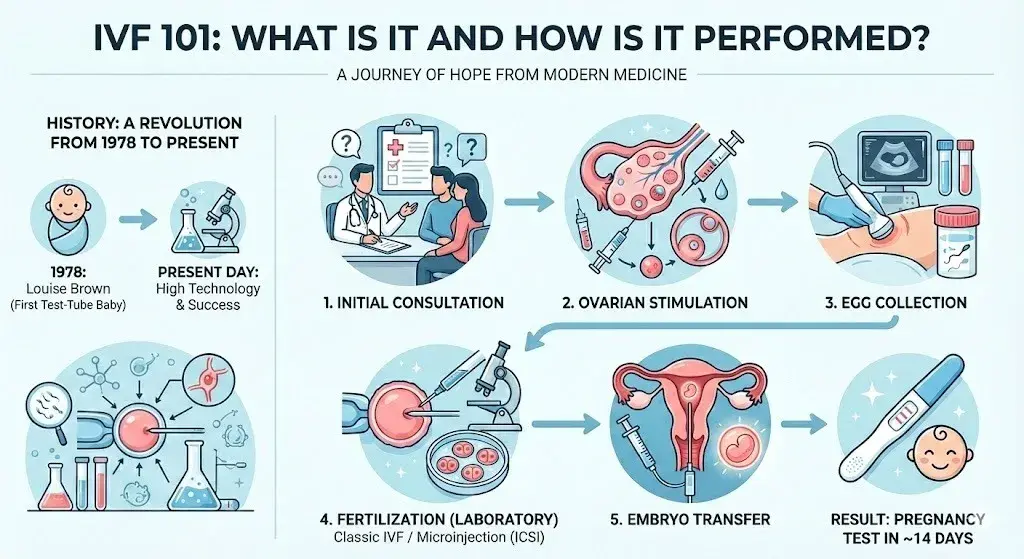
IVF treatment is described as a true revolution in medical history. The process began with Louise Brown, the first "test-tube baby" born in 1978. Although success rates were quite low in the early years of the treatment, thanks to developing technology and laboratory infrastructure, world-class success is achieved today. In our international centers, IVF centers started to become widespread from the 1990s onwards.
How is IVF Treatment Performed?
Although the treatment process is planned according to the special condition of each couple, it generally consists of 5 basic stages:
1. Initial Consultation and Evaluation
The couple's medical history is examined, factors causing infertility are investigated, and necessary tests are performed to draw a personalized roadmap.
2. Ovarian Stimulation
At the beginning of the menstrual cycle, hormone medications are used to ensure that the ovaries produce a large number of high-quality eggs.
3. Egg Collection
Mature eggs are collected under sedation in a procedure lasting approximately 15-20 minutes and sent to the laboratory. At the same stage, the highest quality sperm samples taken from the male are selected.
4. Fertilization (Laboratory Process)
Collected eggs and sperm are brought together in a laboratory environment. Here, classic IVF or the microinjection (ICSI) method, which is especially preferred in male infertility, can be used.
5. Embryo Transfer
The highest quality embryos that have fertilized and developed are placed into the mother's womb with the help of a thin catheter in a painless procedure.
Modern Technologies Enhancing Success
The process concludes with a pregnancy test to be performed approximately 14 days after the transfer. Modern technologies used today take the chance of success even higher in each of these stages:
- Embryo Freezing: Allows for future pregnancy attempts without repeating the entire cycle
- Genetic Screening (PGT): Ensures only healthy embryos are transferred
- AI-Supported Selection: Advanced technology helps identify the most viable embryos
Your Journey Begins Here
IVF treatment represents hope and possibility for countless couples worldwide. With modern technology, experienced specialists, and personalized care, the dream of parenthood is within reach.
Frequently Asked Questions
How long does the entire IVF process take?
A typical cycle takes about 2 to 3 weeks from the start of ovarian stimulation to the egg retrieval. The embryo transfer usually happens 3-5 days later.
Does IVF increase the chance of twins?
Yes, if multiple embryos are transferred. However, modern Single Embryo Transfer (SET) policies aim to minimize this risk while maintaining high success rates.
Can I choose the gender?
In our international centers, gender selection is strictly prohibited by law unless there is a specific sex-linked genetic disease risk that needs to be screened for.
Recommended Reading
This information is for informational purposes only and does not constitute medical advice. Please consult your physician.