Surgical and Implant Treatments: A Step-by-Step Guide
Surgery and implantology represent one of the most technically precise fields of dentistry—and undeniably, one of the fields most feared by patients. However, when the biological foundations of these modern surgical procedures are clearly understood, patient trust profoundly increases, and fear is quickly replaced by a conscious, predictable healing process.
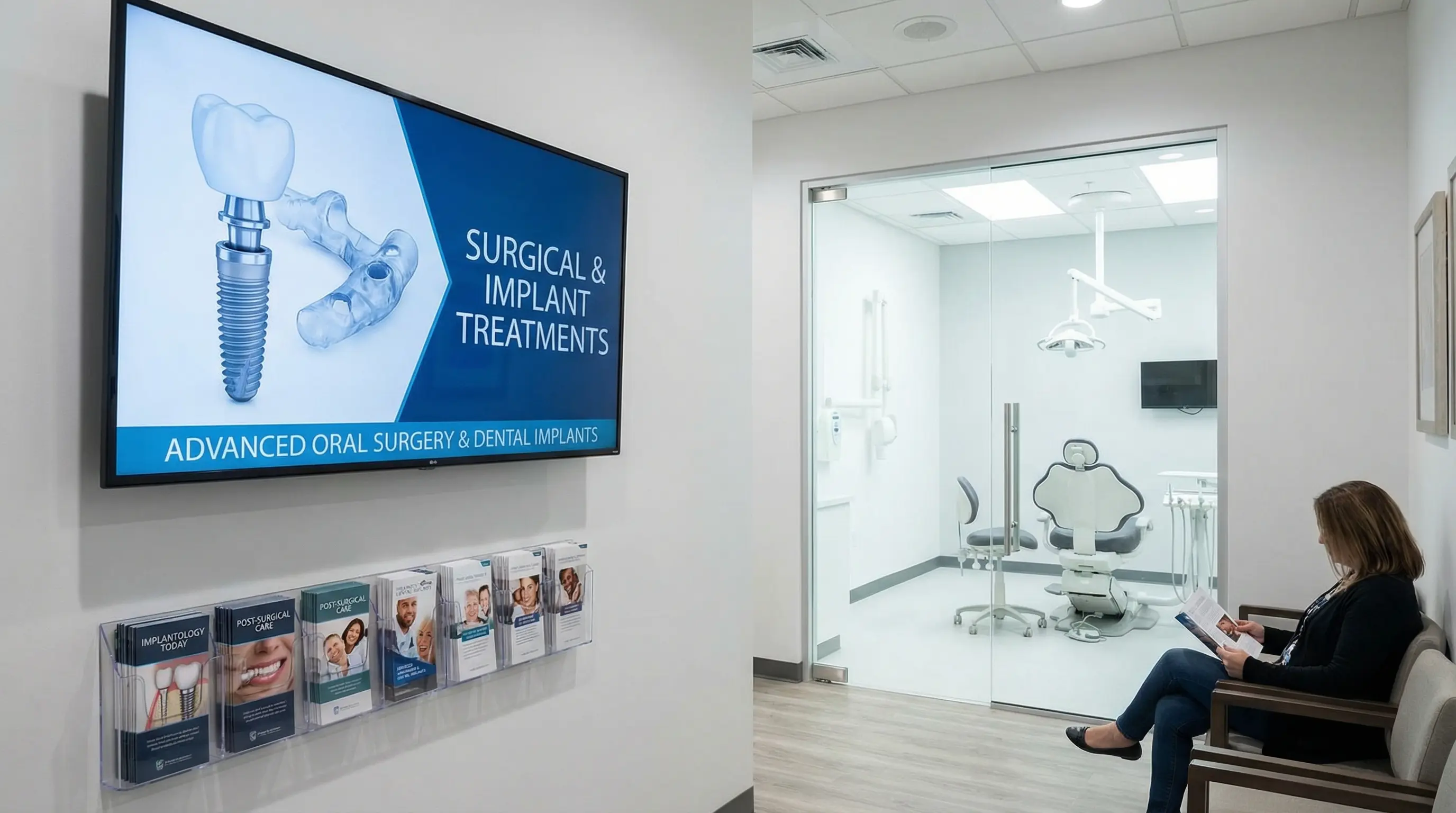
Step-by-Step Dental Implantation Stages
Dental implants are titanium artificial roots placed directly into the jawbone area where teeth are missing, flawlessly mimicking the function and structure of a natural tooth root. The ultimate success of an implant depends entirely on "osseointegration"—the process where the implant surface impeccably fuses with the jawbone biologically.
Implant treatment requires a disciplined timeline and systematic planning:
- Consultation and 3D Tomography Planning: Before any physical procedure begins, a 3D dental tomography (CBCT) scan is mandatory. This allows specialists to evaluate the jawbone’s thickness, volume, and its millimeter-level proximity to anatomical structures like sinus cavities or nerve channels. Simultaneously, the patient's systemic health (e.g., blood pressure, diabetes) is thoroughly examined to ensure total surgical safety.
- Surgical Operation: The procedure is performed completely pain-free under local anesthesia by our expert oral surgeons. The gum is gently opened, an implant socket is prepared in the bone, and the artificial root is securely placed. A standard single-implant placement typically takes only 15 to 30 minutes to complete.
- Healing (Osseointegration) Process: After the implant is placed, an average healing period of 3 to 6 months is expected for the bone tissue to completely encompass and biologically fuse with the titanium surface.
- Prosthesis Placement: Once the healing phase is successfully complete, the prosthetic stage begins. The dimensions of your jaw structure are taken using highly accurate digital scanners or traditional methods, and a custom-made porcelain or Zirconia crown—perfectly matched to your face and tooth structure—is produced and fixed permanently onto the implant.
Bone Grafting and Sinus Lifting Operations
For an implant treatment to be viable, the patient's jawbone must have sufficient volume and thickness to support the titanium root. In patients lacking adequate bone volume, advanced surgical techniques such as bone powder (graft) transplantation are utilized to guarantee implant success.
Especially in the case of long-term tooth loss in the upper back jaw regions, the delicate "sinus" membranes above the jaw tend to sag downward over time, severely narrowing the bone volume. In these scenarios, a Sinus Lifting operation is performed. The sinus floor is surgically pushed upward, and the resulting cavity is safely filled with a bone graft. These bone powders can be obtained from the patient's own body (autogenous), synthetic materials (alloplastic), tissue banks (allograft), or animal sources (xenograft).
When additional surgical procedures like bone grafting or sinus lifting are performed, the healing time required to form new, healthy bone in the region generally extends to 4 to 6 months.
Impacted Wisdom Teeth Operations and Post-Operative Care
Wisdom teeth (third molars) can cause significant damage to neighboring teeth, lead to crowding, and carry a high risk of cyst or infection formation when they cannot find enough space in the jaw, erupt at the wrong angle, or remain entirely impacted within the bone. To eliminate these severe biological threats, impacted teeth must be surgically extracted.
Post-Operative Process and Managing Physiological Reactions:
If the surrounding bone tissue is manipulated to remove an impacted tooth (bone retention), it is an entirely normal physiological reaction to experience temporary swelling in the face afterward.
- Swelling Management: Applying external cold compresses exactly as strictly advised by your dentist will significantly slow down blood flow in the area, keeping the swelling to an absolute minimum.
- Nutrition and Care: During the first 24 hours following the operation, you must absolutely avoid smoking, abstain from extremely hot or hard foods, and refrain from vigorously rinsing your mouth to ensure the protective blood clot remains securely intact.
- Medication Usage: The regular and disciplined use of antibiotics and painkillers prescribed by your dentist will effortlessly manage any pain and eliminate the risk of infection, ensuring a smooth and incredibly healthy recovery. The healing process is typically completed rapidly within just a few days.
All-on-4 and All-on-6 Implant Concepts (Same-Day Teeth)
For patients who have lost all or most of their teeth, traditional bone grafting and individual implants can be a lengthy process. The revolutionary All-on-4® and All-on-6 concepts offer a life-changing alternative. By strategically placing 4 or 6 specialized implants at precise mathematical angles into the densest areas of the jawbone, a full arch of fixed, beautiful temporary teeth can be attached on the exact same day as the surgery. This advanced technique frequently eliminates the deeply complex need for bone grafts and allows patients suffering from total tooth loss to leave the clinic completely transformed with a functional, confident smile in just a single visit.
Apicoectomy (Root End Surgery)
At Wholecares, our primary philosophy is to fiercely protect and save your natural tooth whenever biologically possible. When a traditional root canal treatment is insufficient to clear a stubborn, recurring infection at the tip of a tooth's root, an apicoectomy is expertly performed. In this incredibly precise microsurgical procedure, the gum tissue is gently opened, the infected tip of the root is decisively removed, and the end is securely sealed with a biocompatible filling. This permanently eradicates the cyst or infection, extending the lifespan of your natural tooth and successfully preventing the painful need for an extraction.
Reclaim Your Confident Smile
Overcoming the fear of oral surgery is the first, most courageous step toward lifelong oral health, aesthetic freedom, and the joy of eating your favorite foods again. By seamlessly combining cutting-edge 3D technology with deeply compassionate care, the Wholecares surgical team guarantees a flawlessly comfortable experience. Contact us today to meticulously plan your personalized surgical or implant journey.
Frequently Asked Questions
Does implant surgery hurt?
The procedure is entirely painless, performed under local anesthesia. Any mild discomfort experienced after the surgery is easily managed with prescribed painkillers.
How long does an implant take to heal?
Standard healing (osseointegration) takes about 3 to 6 months. If bone grafting or sinus lifting was involved, it might take 4 to 6 months before placing the final crown.
What is a sinus lift?
When the bone in the upper jaw is too thin to support an implant, a sinus lift gently elevates the sinus membrane and places a bone graft to create sufficient volume.
Recommended Reading
This information is for informational purposes only and does not constitute medical advice. Please consult your physician.