Restorative and Aesthetic Dentistry: Digital Smile Design & More
Restorative and aesthetic dentistry is a multidisciplinary field that not only aims to repair lost dental tissues but also meticulously designs aesthetic smiles that perfectly harmonize with the patient's facial features through digital technologies and biomechanical principles.
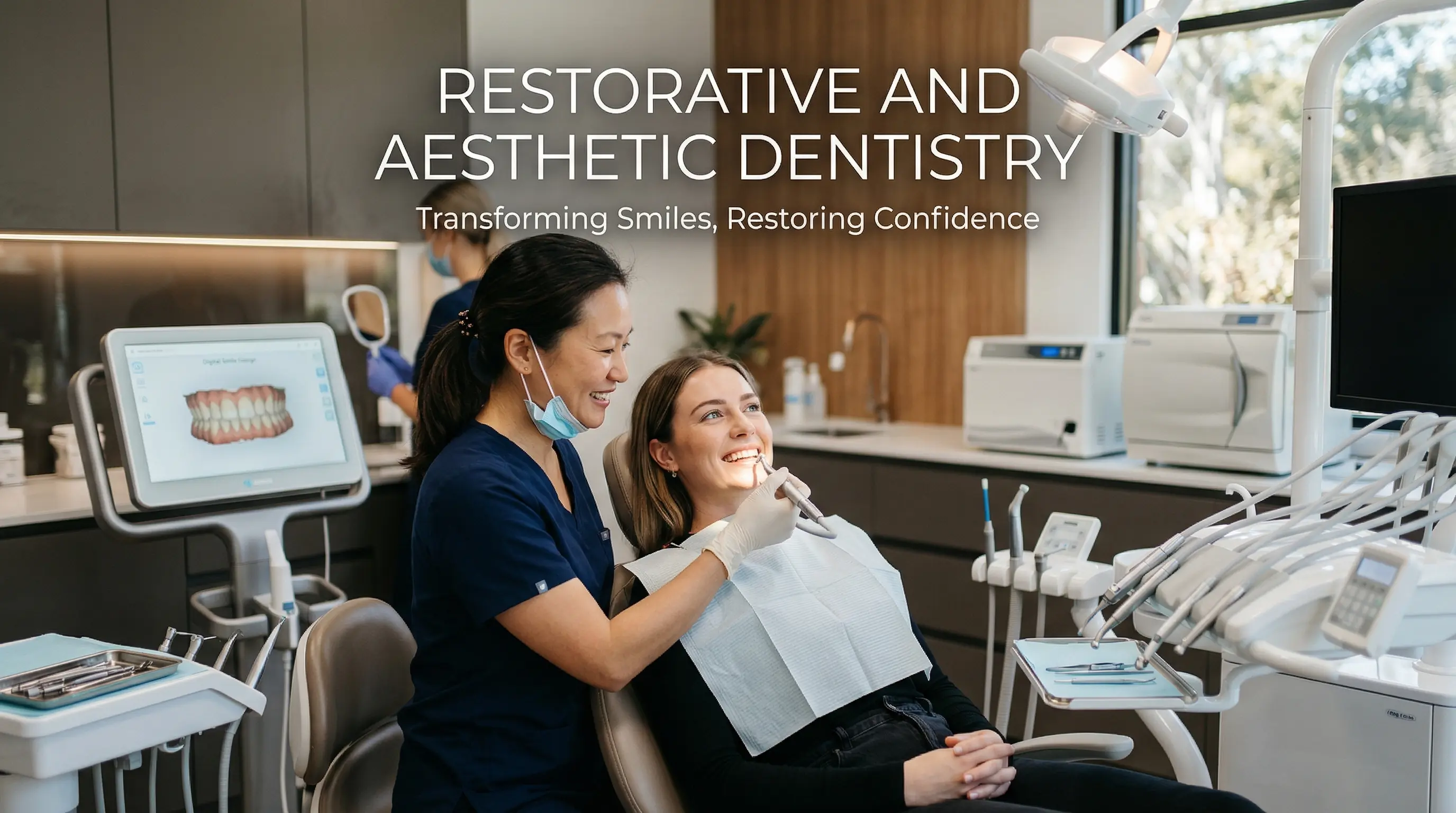
Today, traditional methods in this field have been almost entirely replaced by computer-aided design and manufacturing (CAD/CAM) technologies.
Digital Smile Design and Digital Planning Processes
Smile design is the process of determining the ideal aesthetic form by digitally analyzing the proportions of the patient's teeth, gums, lips, and face in intricate detail.
During this process, traditional impression materials (putty) have been completely replaced by intraoral scanners. This technology significantly increases patient comfort—eliminating the gag reflex and anxiety—while minimizing the margin of error. The digital impressions obtained are processed with CAD/CAM technologies and AI-supported software, allowing restorations to be designed with millimeter-level precision.
In the planning phase, it is not merely the color of the tooth that is calculated; the surface texture (macro and micro-morphology) and light transmittance are also digitally mapped. The absolute greatest advantage of this entirely digital workflow is the "Mock-up" application. Without any physical intervention or cutting of the teeth, patients can tangibly see and experience their final smile in their own mouth before the treatment even begins, building profound trust and eliminating fear.
Porcelain Veneers (Leaf Porcelain) and Minimally Invasive Approaches
Commonly known as "leaf porcelain," porcelain veneers represent the pinnacle of tissue-preserving (minimally invasive) approaches in aesthetic dentistry.
In this method, the procedure is completed by applying only a very slight abrasion—averaging between 0.3 and 0.7 mm—exclusively to the front surface of the tooth. In highly suitable cases, the procedure can even be completed without touching the tooth at all (prepless veneers). Because the minimally invasive approach maximally preserves the natural enamel tissue of the tooth, it ensures that the restoration bonds to the tooth much more powerfully and durably.
Thanks to these ultra-thin porcelain leaves, fractured, discolored, or slightly crowded teeth can be beautifully corrected without the need for orthodontic treatment. Furthermore, tooth lengths can be extended, and gaps (diastemata) can be seamlessly closed. Additionally, CAD/CAM technology allows these delicate veneers to be designed and produced in a single session, offering patients immense time savings.
The Biomechanics of Zirconia and Full Ceramic (E-max) Restorations
As aesthetic and durability expectations have evolved, the metal-supported porcelains of the past have been largely replaced by zirconium dioxide and full ceramic restorations.
Zirconia crowns completely eradicate the unwanted grey reflections caused by metal, particularly at the gum margin. The biocompatible structure of zirconia establishes a flawless biological integration with the gum tissue, ensuring the long-term protection of gingival health.
Full ceramic restorations (such as lithium disilicate-based E-max), on the other hand, are the dental materials closest to natural teeth in terms of light transmittance. Because they contain absolutely no metal, they reflect light exactly as natural enamel does. This makes them the ideal and flawless solution, especially for front teeth where patients naturally hold the highest aesthetic expectations for maximum naturalness.
Teeth Whitening (Bleaching) Technologies
Teeth whitening is one of the most dynamic areas of restorative dentistry. Unlike abrasive commercial toothpastes that merely scratch away superficial stains, professional whitening directly penetrates the pigments inside the internal structure of the tooth, providing genuine and profound color lightening. There are two primary application methods:
- Office-Type (Clinical) Whitening: Applied under the strict supervision of a dentist in a clinical setting, high-concentration agents are activated by lasers or special powerful light sources. Very fast and highly visible results are typically achieved in 2 to 3 sessions lasting 30-45 minutes each. The use of a laser dramatically accelerates the chemical reactions within the whitening gel.
- Home-Type Whitening: Custom-made transparent trays are prepared using impressions taken from the patient's mouth. The patient applies lower-concentration whitening gels inside these trays at home for a duration recommended by the dentist (usually 8-16 days or 1-2 weeks). While taking longer to show effects compared to office bleaching, it is an economical alternative. In modern clinics, "combined whitening," utilizing both methods for more striking and permanent results, is highly preferred.
Post-Whitening Sensitivity Management: Experiencing temporary tooth sensitivity for 24-48 hours after the procedure—due to fluid loss (dehydration) in the teeth—is an entirely normal and reversible side effect. Patients are advised to abstain from excessively hot and cold foods, as well as deeply pigmented items like tea, coffee, or colored foods that could cause re-staining during the first few days. Within a few days, the tooth's water content normalizes, the sensitivity completely disappears, and the teeth shed their initial opaque white appearance to reveal a beautifully transparent, natural, and radiant glow. Laser-assisted whitening procedures are particularly successful at minimizing this temporary sensitivity.
Aesthetic Composite Bonding (Direct Restorations)
For patients seeking a rapid, conservative, and economical aesthetic transformation without any structural tooth removal, aesthetic composite bonding is the gold standard. Using high-quality, tooth-colored composite resins, our dentists can flawlessly rebuild chipped edges, brilliantly close unwanted gaps (diastemas), and correct minor shape irregularities in a single, painless visit. Because the biological tooth structure remains completely untouched, bonding is the ultimate expression of minimally invasive dentistry.
Porcelain Inlays and Onlays (Indirect Fillings)
When a tooth suffers from extensive decay or structural damage that a traditional composite filling cannot adequately repair, but is not damaged enough to warrant aggressively cutting down the entire tooth for a full crown, porcelain inlays and onlays are the perfect intermediate solution. Manufactured with absolute precision using CAD/CAM technology in our dental laboratory, these custom "partial crowns" fit perfectly into or over the damaged area. They incredibly restore the tooth’s natural strength and biting force while perfectly matching your natural tooth color, preserving as much healthy enamel as biologically possible.
Begin Your Aesthetic Journey
Every flawless smile begins with a meticulously tailored digital plan. If you are ready to overcome your dental anxieties and achieve a perfectly natural, healthy, and radiant smile, our specialized team at Wholecares is here for you.
Frequently Asked Questions
Are porcelain veneers painful to get?
No, the procedure is entirely painless. Our dentists use local anesthesia during the minimal tooth preparation phase to ensure maximum comfort. Many patients require no pain medication afterward.
How long does teeth whitening last?
The results of professional teeth whitening can last from several months to a few years, depending heavily on your lifestyle, oral hygiene, and dietary habits (such as coffee or tobacco consumption).
What is the difference between Zirconia and E-max?
Zirconia is known for its immense structural strength, making it ideal for molars and large bridges. E-max provides superior light transmittance and aesthetics, making it the preferred choice for front teeth restorations.
Recommended Reading
This information is for informational purposes only and does not constitute medical advice. Please consult your physician.