Orthodontics and Clear Aligner Treatments: Invisalign vs. Braces
Orthodontics provides patients with both functional excellence and a breathtaking aesthetic transformation by meticulously aligning the teeth and jaws. From traditional metal braces to the nearly invisible modern clear aligners, this technological journey is now overwhelmingly evaluated by patients through the lens of "Visibility and Comfort."
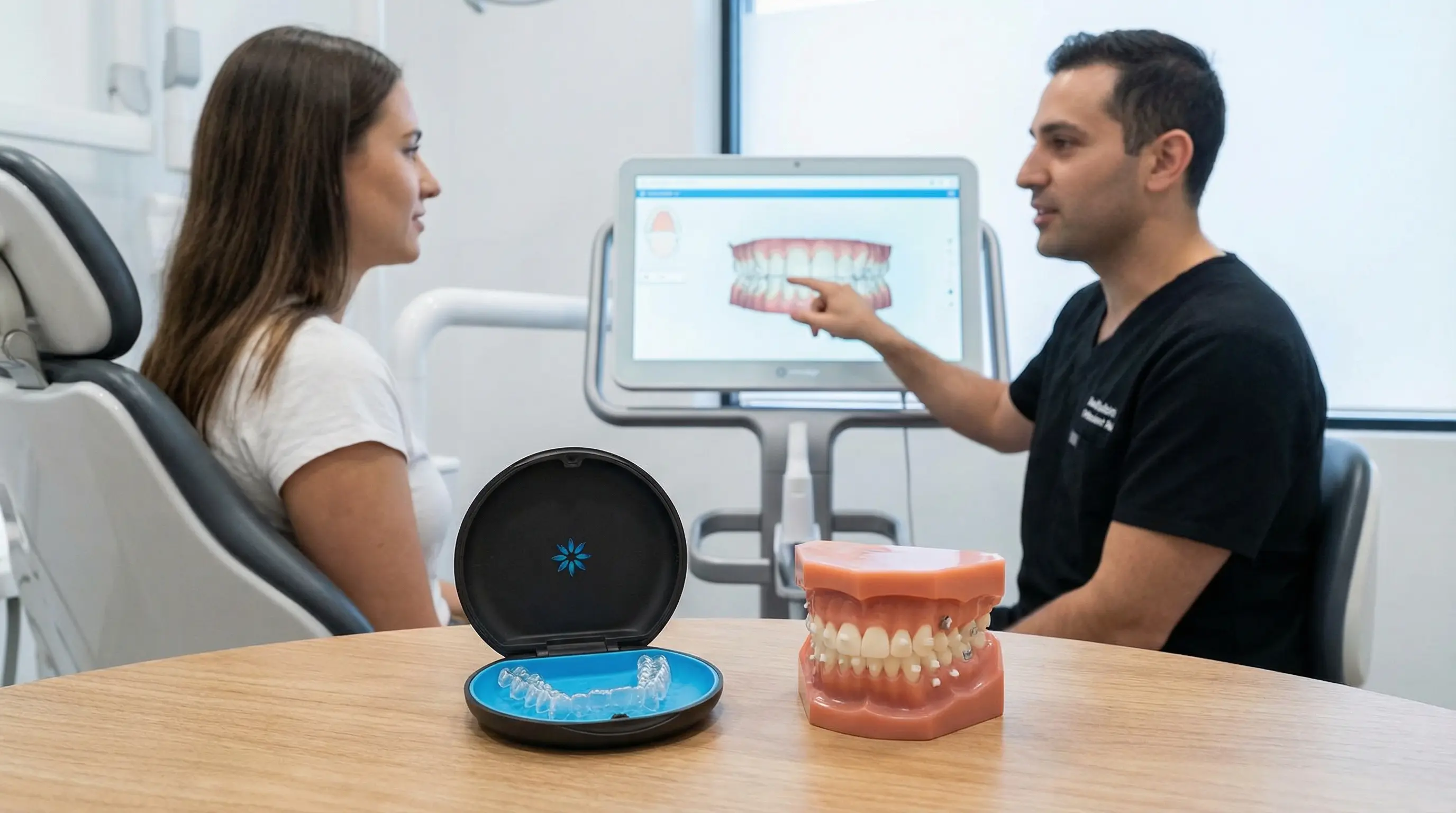
Advantages of Clear Aligner (Invisalign) Treatments
Clear aligner treatments are modern, custom-made alignment solutions optimally produced via 3D computer technologies, offering patients a completely "wire-free" orthodontic experience.
Undoubtedly, the greatest advantage of this highly advanced method is its superior aesthetics. Because the aligners are virtually invisible, patients do not experience aesthetic anxiety or dentophobia during their treatment; in daily life, they often go completely unnoticed.
Furthermore, the fact that they are removable is absolutely revolutionary for both your comfort and hygiene. Since you can easily take out your aligners while eating, the frustrating obligation to avoid hard or sticky foods—a rigid rule of traditional braces—is instantly eliminated. Similarly, removing the aligners during routine brushing and flossing allows for flawless oral hygiene, profoundly reducing the risk of new cavity formation compared to classic metal wires. The sheer psychological relief of never dealing with painfully poking wires or abruptly broken brackets further elevates this premium treatment.
However, it is overwhelmingly crucial to understand that the success of this transparent treatment relies entirely on the patient's strict self-discipline to wear the aligners for a minimum of 20 to 22 hours every single day.
Traditional Braces and Bracket Systems
Despite the incredible comfort offered by clear aligners, traditional braces and bracket systems proudly remain the absolute gold standard for intensely treating severe crowding or highly complex skeletal irregularities.
Consisting of brackets bonded directly onto the teeth and the high-tension wires connecting them, this mechanical system applies continuous, unwavering pressure to the teeth. For highly challenging or stubborn cases, standard braces can yield more predictable, highly effective, and occasionally much faster permanent results.
In traditional treatments, the choice of material directly impacts the aesthetic experience. While metal wires and brackets offer an incredibly durable and economical option, meticulously crafted porcelain (sapphire) brackets have been developed specifically for adult patients with extremely high aesthetic expectations. Porcelain brackets blend seamlessly with the natural tooth color, creating a significantly less conspicuous and visually pleasing alternative.
Moreover, in our modern clinics, alongside the traditional method of bonding brackets one by one, extraordinarily innovative techniques like "indirect bonding" are increasingly utilized. In this method, the brackets are first precisely prepared on a 3D mold and then transferred to your teeth all at once, dramatically shortening the stressful time you spend in the dental chair at the start of your journey.
The Orthodontic Retention Process
The most critical—and often the most tragically overlooked—stage of any orthodontic journey is the "retention" (pekiştirme) period. Once the active treatment is gloriously finished and your wires or clear aligners are finally removed, your teeth have a very high biological tendency to aggressively shift back to their old, crowded positions (relapse).
To completely prevent this regression, secure the permanence of your flawless new alignment, and give the jawbone, gums, and muscles adequate time to biologically adapt to their new structural positions, retention devices are absolutely mandatory.
Protective, ultra-thin wires (fixed retainers) permanently bonded to the invisible back (inner) surfaces of your front teeth, or clear retention plates worn strictly according to your doctor's prescribed schedule, absolutely guarantee that your perfect smile is protected for a lifetime. If retention treatment is irresponsibly neglected, the risk of teeth reverting is dangerously high, leading to the tragic failure of a long and deeply dedicated active orthodontic journey.
Lingual Orthodontics (Hidden Braces)
For adult patients or working professionals who require the immense mechanical strength and predictability of traditional metal braces but demand absolute invisibility, lingual orthodontics is the ultimate solution. Unlike traditional braces, lingual brackets are custom-designed and perfectly bonded to the back (lingual or tongue side) of the teeth. This makes them 100% invisible from the outside, even when laughing or speaking freely. While they may require a slightly longer adaptation period for the tongue, they offer the perfect compromise between aesthetic discretion and highly complex, severe orthodontic correction.
Accelerated Orthodontics for Rapid Results
For adult patients who only struggle with minor crowding or spacing issues in their front teeth, "Minor Tooth Movement" (MTM) and accelerated clear aligner protocols offer incredibly fast results. Using state-of-the-art clear aligners focused purely on the aesthetic zone (the visible front teeth), perfect alignment can often be achieved in as little as 3 to 6 months. This accelerated approach is highly popular among patients seeking a rapid, magnificent structural transformation to supplement their aesthetic smile designs without waiting years.
Discover Your Future Smile Today
Thanks to advanced digital intraoral scanners, you no longer have to blindly guess what your teeth will look like after your orthodontic journey. During your very first appointment at Wholecares, we can create a precise 3D digital simulation showing you your exact post-treatment smile in mere minutes. Contact us today to embrace the incredible comfort of modern, invisible orthodontics.
Frequently Asked Questions
Are clear aligners really invisible?
Yes, Invisalign and other premium clear aligners are made of patented, transparent medical-grade plastics that are virtually invisible when worn, making them undetectable from a conversational distance.
Does orthodontic treatment hurt?
There is usually some mild, temporary pressure or soreness for a few days after changing aligner trays or tightening wires, but it is deeply manageable and simply a biological sign that your teeth are successfully moving into their perfect positions.
Recommended Reading
This information is for informational purposes only and does not constitute medical advice. Please consult your physician.