Gum Health and Periodontology: Protecting Your Smile's Foundation
The foundation of both a breathtakingly healthy smile and your overall oral health entirely depends on your gums. Periodontology must be viewed as a vital center of awareness against gum diseases, which generally progress silently and insidiously without obvious early pain. This specialized field aims to protect not just the teeth themselves, but the critical supporting tissues that firmly attach your teeth to the jawbone.
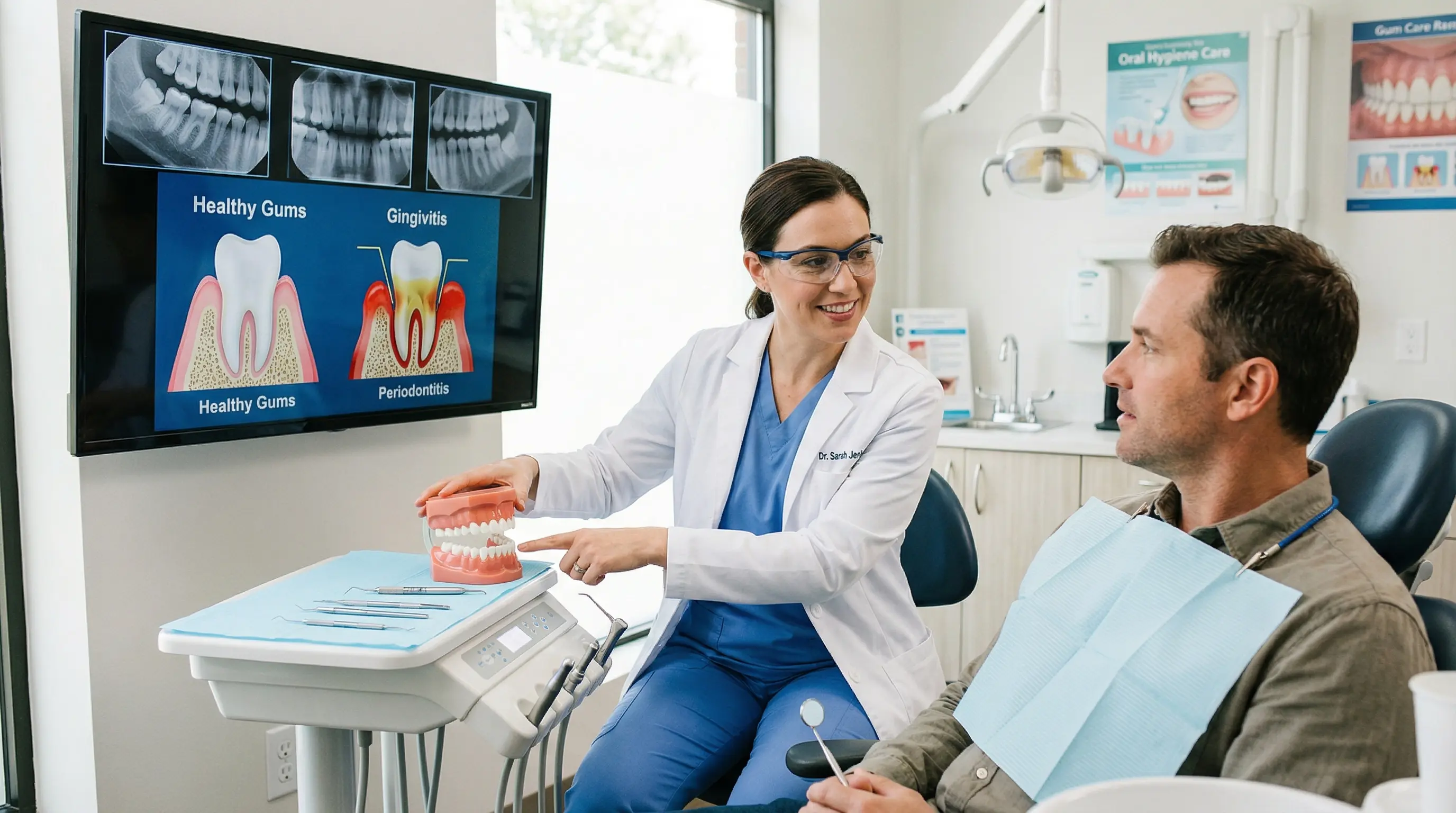
Gum Diseases: From Gingivitis to Periodontitis
Gum diseases are most commonly initiated by the accumulation of bacterial plaque resulting from inadequate or incorrect oral hygiene.
The first and mildest stage of the disease is Gingivitis (gum inflammation). It manifests through gums that bleed during routine brushing, appearing uncharacteristically red, swollen, and highly sensitive. At this early stage, the tissue damage is fully reversible.
However, if this early inflammation is ignored and left untreated, the infection aggressively advances into the deeper tissues, transforming into a severe gum disease known as Periodontitis. In the destructive stage of periodontitis, deep infected pockets deliberately form between the tooth and the gum. This severe infection ruthlessly leads to the melting and loss of the jawbone that supports the teeth. Ultimately, if the destructive process is not halted, even perfectly cavity-free, healthy teeth will loosen and inevitably be lost.
Gum Recession and Treatment Approaches
Gum recession is a detrimental condition where the gum tissue migrates downward toward the root, visibly exposing the vulnerable tooth roots.
The primary causes of this condition include brushing the teeth too aggressively or in the wrong direction, heavy tartar accumulation, genetic predisposition, chronic teeth grinding (bruxism), and safely advanced periodontal diseases. The sudden exposure of sensitive roots not only creates severe, immediate pain when consuming hot or cold foods but also leaves the unprotected root surface highly vulnerable to rapid decay.
To functionally treat this problem, cover the exposed root surfaces, and permanently eliminate the severe sensitivity, gum grafting surgeries are typically performed. In these highly precise microsurgical operations, healthy soft tissue is gently harvested from the patient's own palate and expertly grafted onto the recessed area, flawlessly restoring the gum to its original, healthy position and thickness.
Laser-Assisted Gum Treatments and Pink Aesthetics
In modern dentistry, advanced laser technology offers tremendous comfort and an extraordinarily high success rate in the safe treatment of gum diseases.
Thanks to laser-assisted treatments applied in advanced gum infections, precisely targeted infected tissues and bacteria are cleared away without any surgical incisions, entirely stitch-free, and practically bloodless. The powerful disinfectant effect of the laser absolutely eradicates bacteria completely hidden within the deep gum pockets while keeping the surrounding healthy tissues entirely unharmed. This significantly accelerates the biological healing process.
Furthermore, lasers have entirely revolutionized the application of "pink aesthetics," one of the most crucial components of aesthetic dentistry. The condition where the gums are excessively visible while smiling is known as a "gummy smile." Using laser technology for gingivectomy (crown lengthening) and precise gum contouring, excess gum tissue is sculpted millimeter by millimeter in a completely painless and bloodless manner. This ensures perfect aesthetic symmetry between the teeth and the gums, ultimately rewarding the patient with a profoundly more aesthetic, harmonious, and confident smile line.
Deep Cleaning (Scaling and Root Planing)
Before advancing to surgical or laser interventions, the absolute gold standard for treating early to moderate gum disease is a professional deep cleaning, clinically known as Scaling and Root Planing (SRP). Unlike a routine regular cleaning that only focuses on the visible tooth surface, SRP meticulously removes hardened tartar and aggressive bacterial toxins hidden completely out of sight deep beneath the gum line. The roots are then perfectly smoothed (planed) to completely prevent bacteria from reattaching, allowing the irritated gums to beautifully heal and reattach tightly against the teeth.
Conquering Chronic Bad Breath (Halitosis)
One of the most socially devastating yet completely curable consequences of untreated gum disease is chronic bad breath (halitosis). Commercial mouthwashes and mints tragically only mask the problem temporarily. The persistent foul odor is directly caused by the volatile sulfur compounds continuously released by the millions of bacteria thriving within deep, infected gum pockets. By professionally treating the underlying periodontal infection through deep cleaning or advanced laser therapy, we completely eliminate the bacterial source, permanently restoring your fresh breath and unshakeable social confidence.
Protect Your Smile’s Foundation Today
Healthy, remarkably firm, and beautifully pink gums are the ultimate biological secret to a truly radiant, lifelong smile. Never ignore the crucial warning signs of bleeding gums or persistent bad breath. At Wholecares, our expert periodontology team utilizes the latest pain-free technologies to fiercely protect and restore your oral health. Contact us today to schedule your comprehensive, completely stress-free gum health evaluation.
Frequently Asked Questions
What is a Gummy Smile and can it be fixed?
A gummy smile is when an excessive amount of gum tissue is visible when you smile. Yes, it can be easily fixed. Using a dental laser, your periodontist can painlessly reshape the gum line (gingivectomy) in a single visit, revealing more of your teeth for a beautifully balanced smile.
Is bleeding during brushing normal?
No, healthy gums should never bleed, even with strong brushing. Bleeding is the very first biological warning sign of Gingivitis (gum inflammation) and requires an immediate dental cleaning and evaluation before bone damage occurs.
Recommended Reading
This information is for informational purposes only and does not constitute medical advice. Please consult your physician.